This summer, part of the AWACA project team travelled to Oslo, Norway, to take part in the 12th SCAR Open Science Conference (Scientific Committee on Antarctic Research). It was an excellent opportunity to share our latest results, exchange ideas with the international polar research community, and showcase the diversity of our research, from logistics in extreme environments to climate modelling.
Congratulations to all our researchers, as well as our engineers, for making SCAR 2026 such a great success for the AWACA project! Discover all their contributions below.
Oral presentations: cloud evolution and isotopes
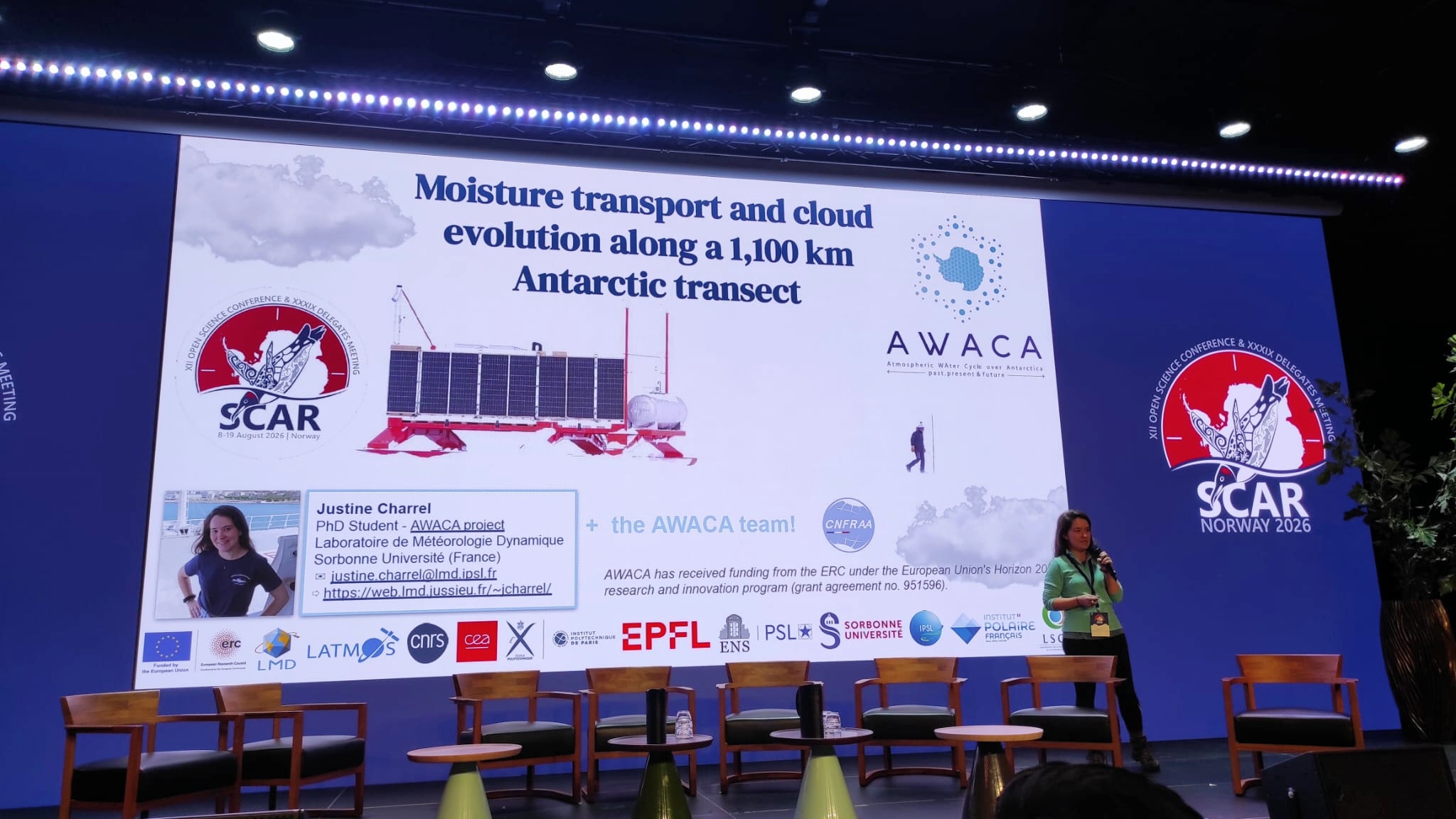
Justine Charrel opened Session S3 (“Polar Meteorology and Atmospheric Processes”) with a presentation keynote dedicated to moisture transport and cloud evolution along a 1,100 km Antarctic transect.
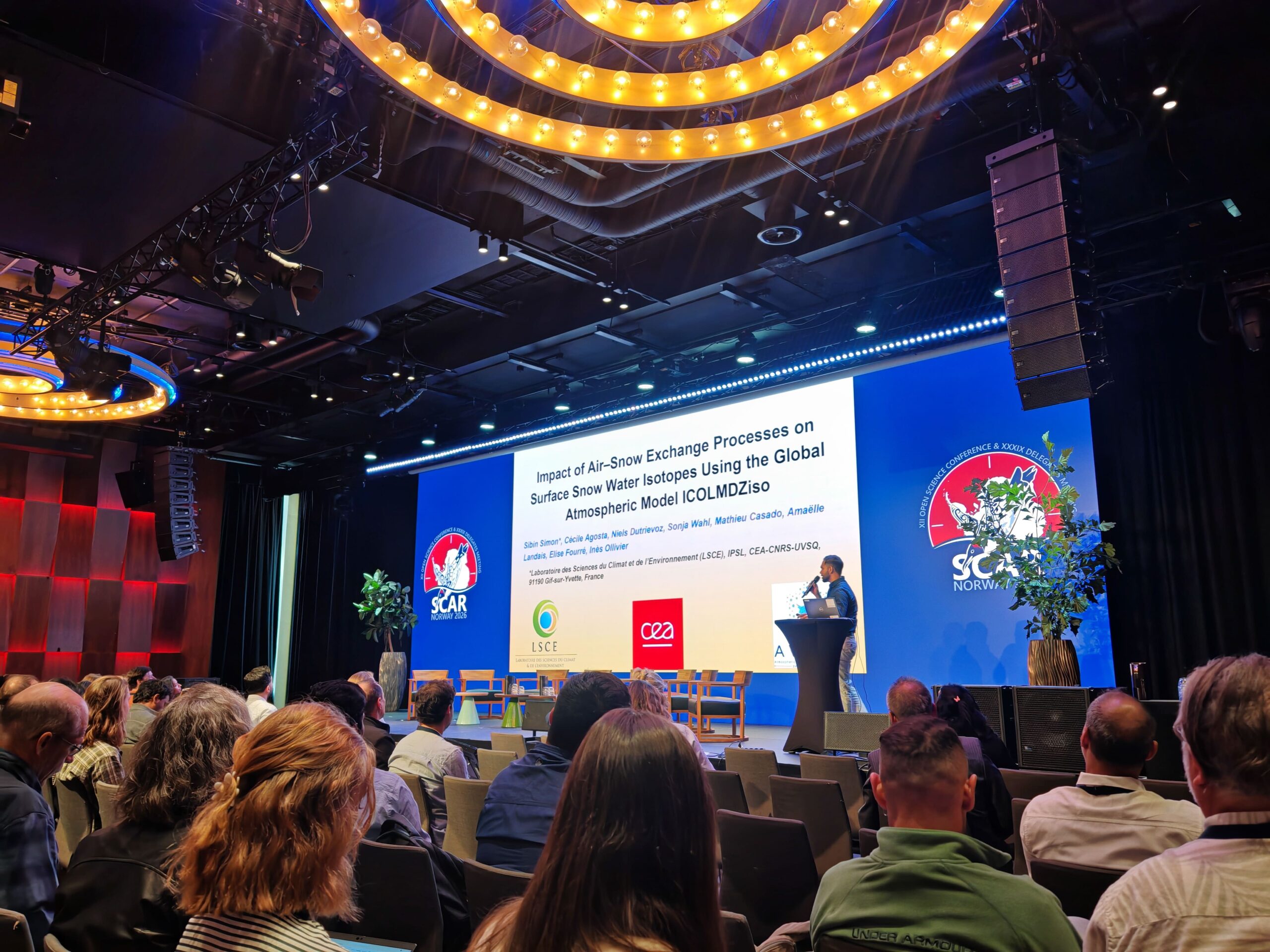
Sibin Simon presented his work on the impact of air–snow exchange processes on the isotopic composition of water in surface snow, using the global atmospheric model ICOLMDZiso.
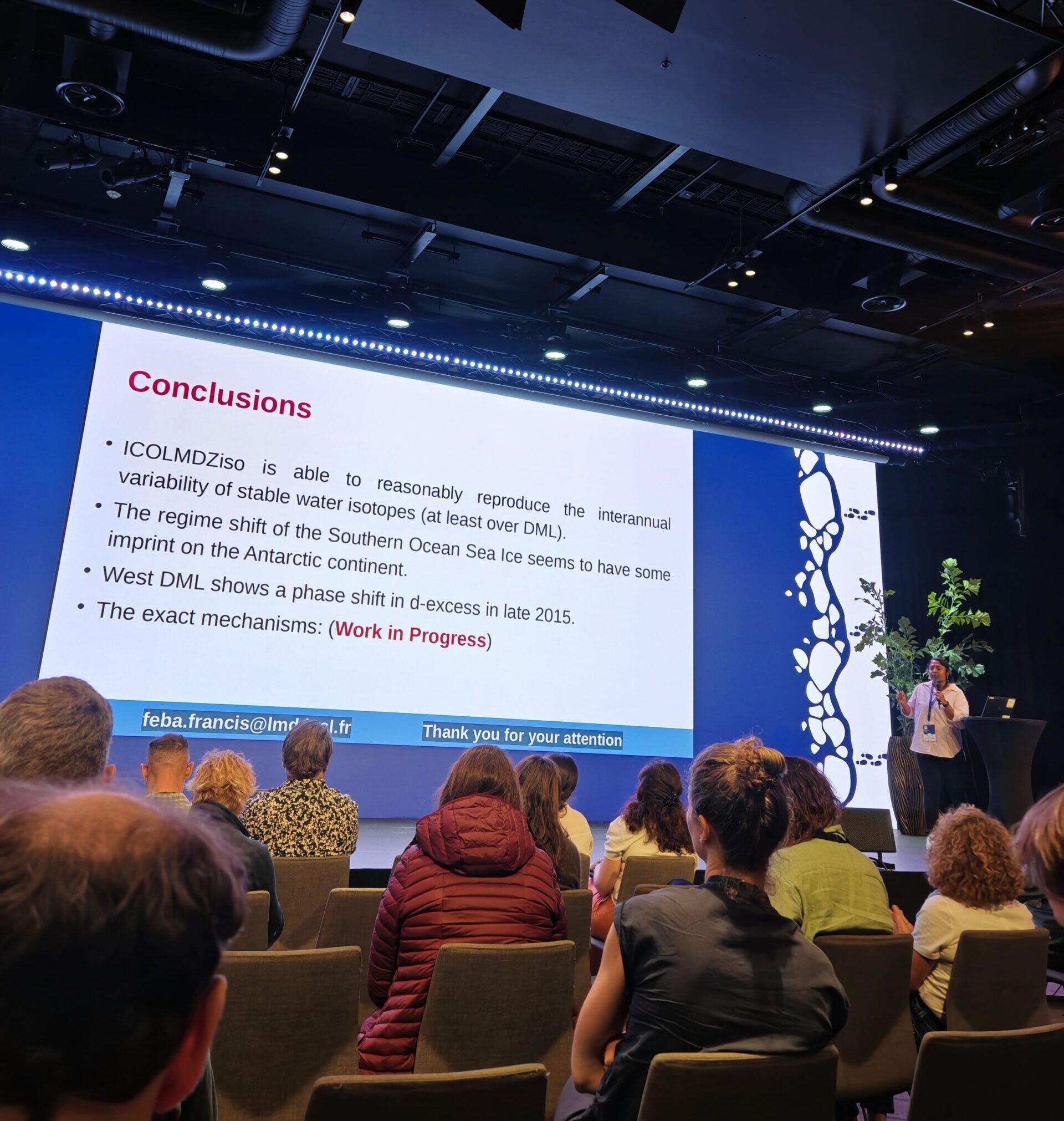
Feba Francis detailed her research on the imprint of sea ice on water isotopes in Antarctica.
Poster sessions: diving into the heart of the water cycle
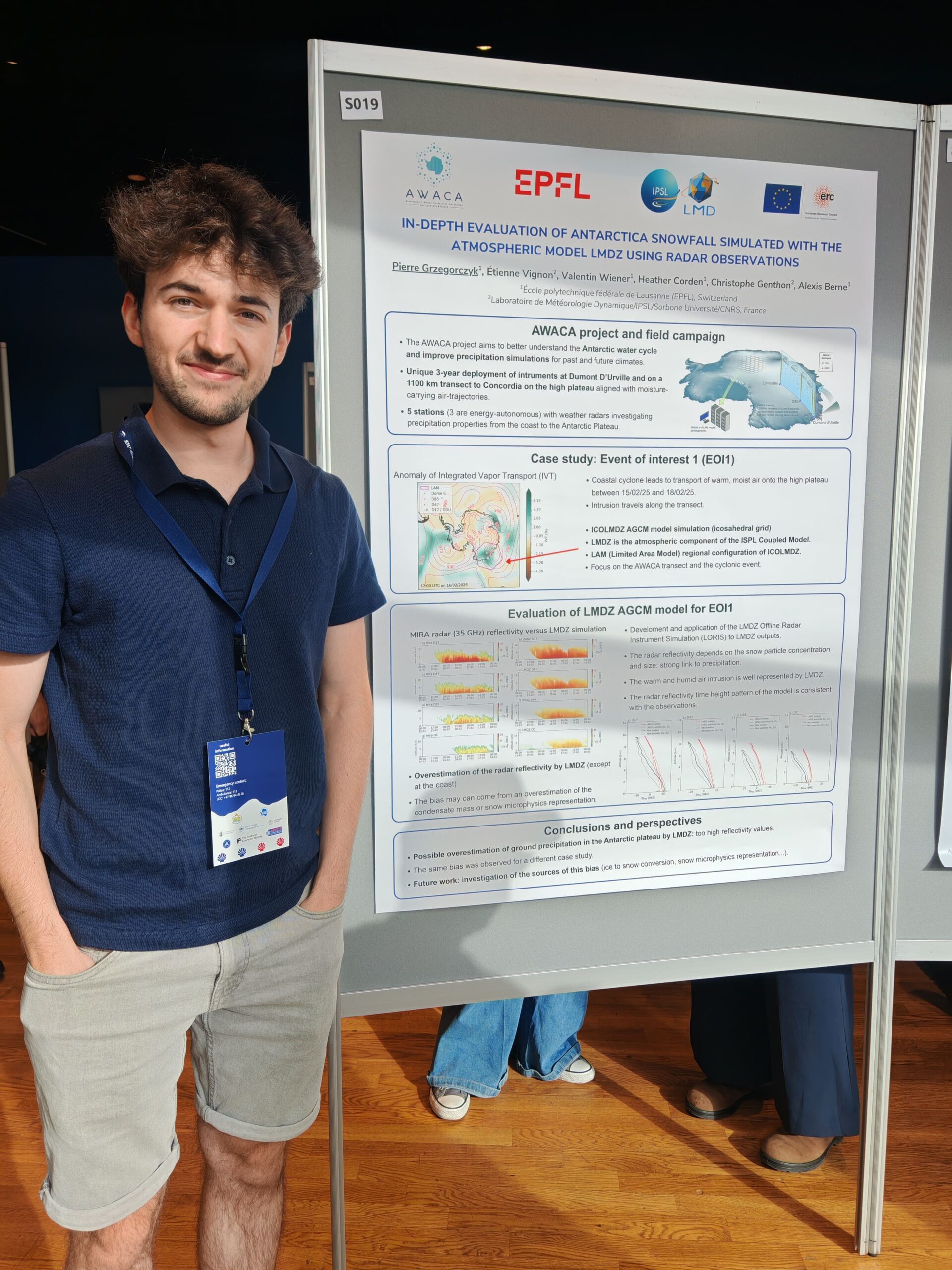
Pierre Grzegorczyk presented an in-depth assessment of snowfall simulated by the LMDZ atmospheric model, based on multi-frequency radar observations from the coast to the Antarctic Plateau.
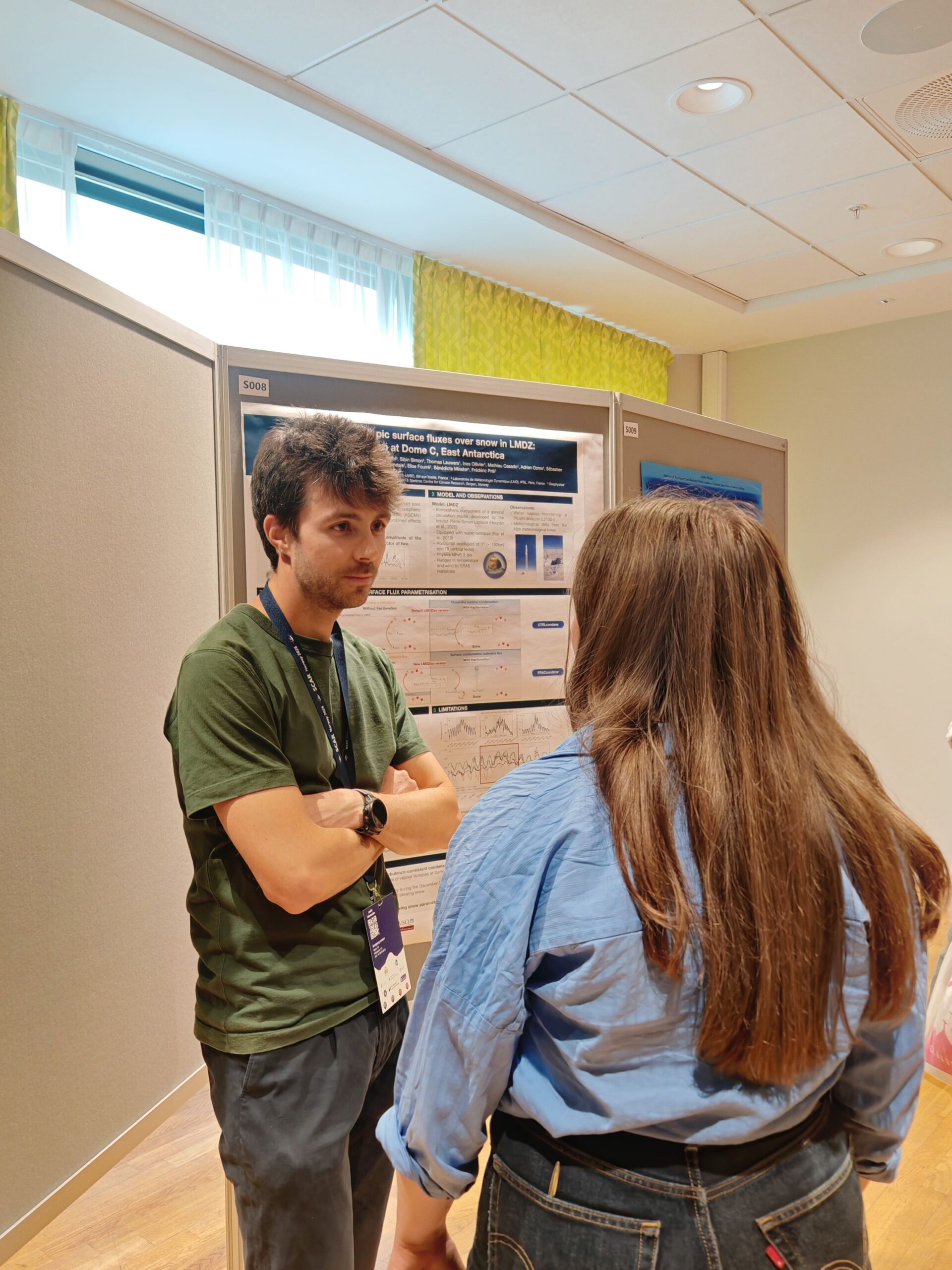
Niels Dutrievoz focused on modelling, presenting the improvements made to isotopic surface fluxes over snow in LMDZ6iso, specifically evaluated at Dome C.
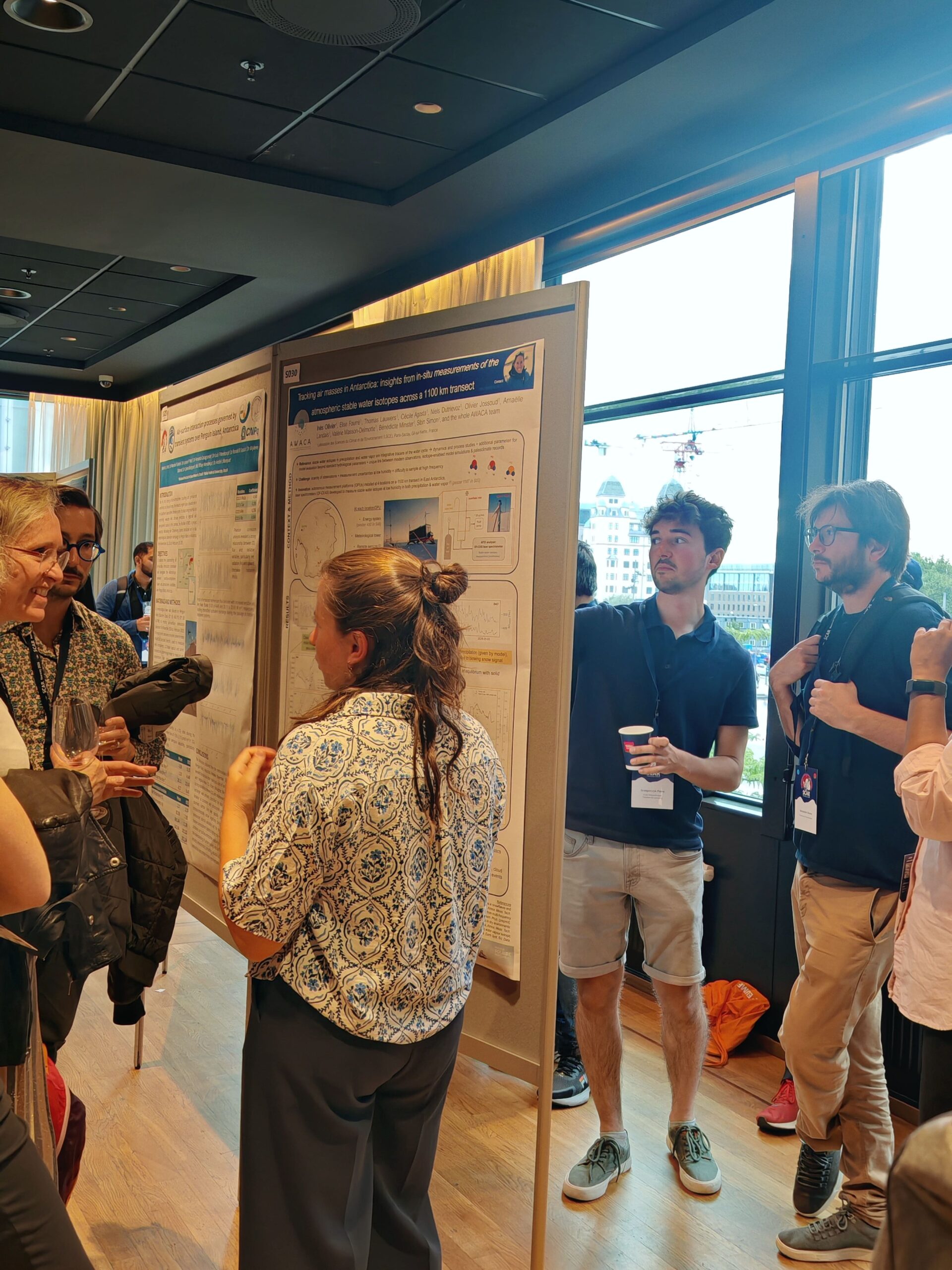
Ines Ollivier illustrated the tracking of air masses along the 1,100 km transect, using in situ measurements of water isotopes, both in water vapour and snowflakes.
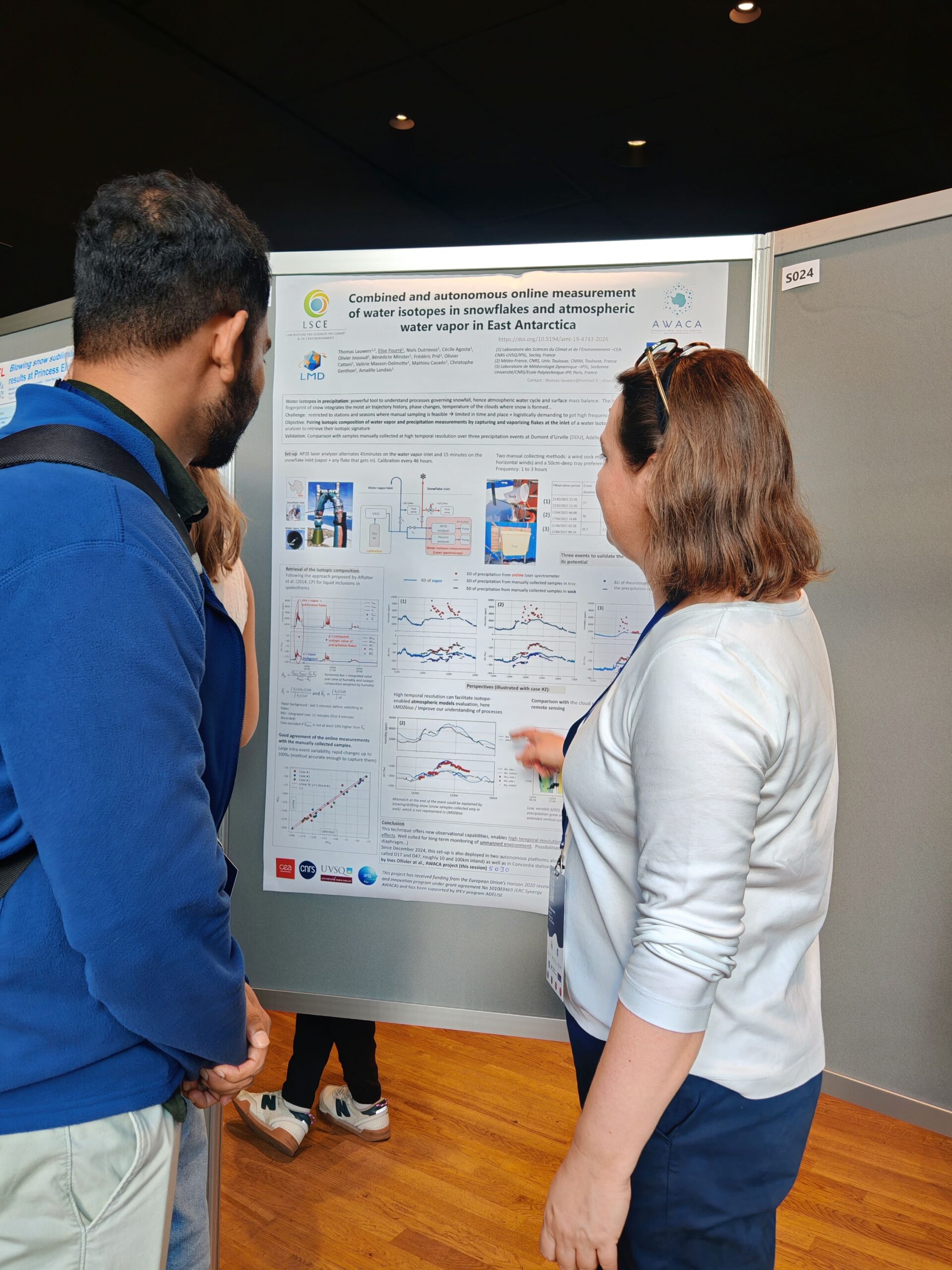
Élise Fourré highlighted the project's instrumental developments, presenting work on the autonomous, combined measurement of water isotopes (in snowflakes and water vapour) at the Dumont d’Urville station.
AWACA’s logistical challenge: towards decarbonising polar research
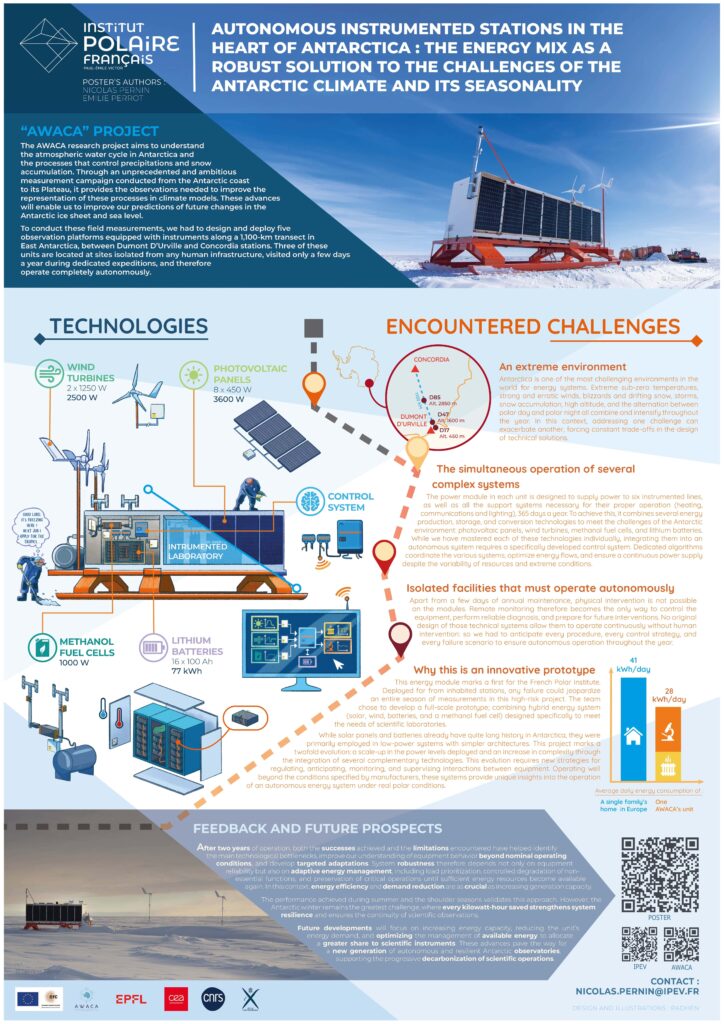
Beyond atmospheric science, the AWACA project is also a major technological challenge. We contributed to the interdisciplinary session (S48) on polar decarbonisation with a dedicated poster. Deploying three autonomous observation platforms along the 1,100 km transect between Dumont d’Urville and Concordia requires 15 tonnes of equipment to be maintained at each site. The real challenge? Keeping the 15 m² modules at +10°C year-round, while outdoor temperatures can fall as low as −60°C, with unpredictable sunlight and winds.
The poster detailed our multi-source energy strategy (solar panels, wind turbines and fuel cells), as well as the unexpected technical challenges involved in managing isolated infrastructure in the Antarctic environment.