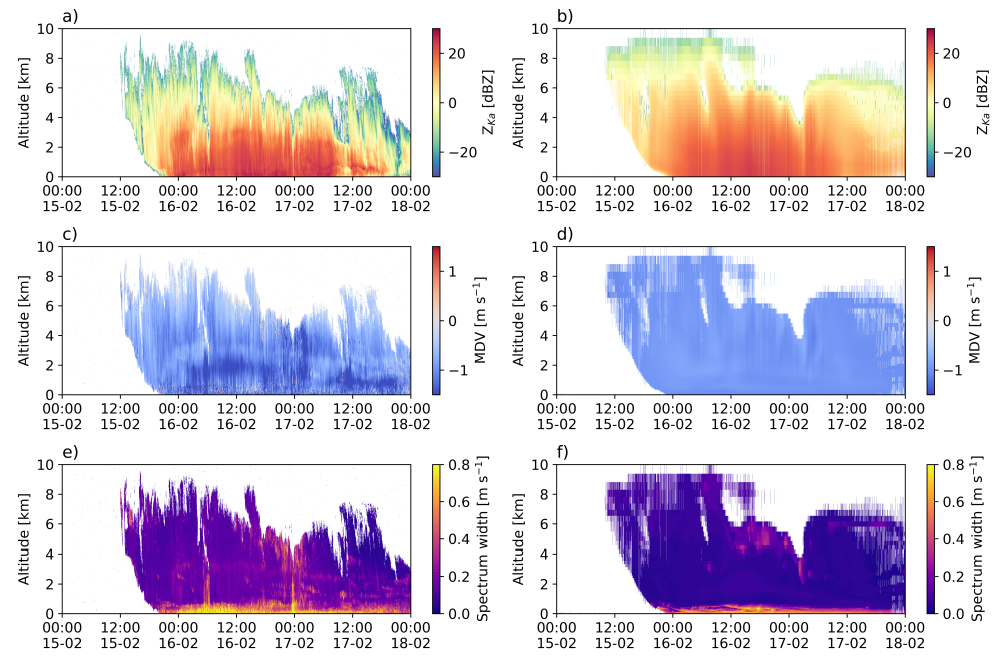
📄 [Preprint] The LMDZ Offline Radar Instrument Simulator (LORIS): A versatile tool for the evaluation of cloud and precipitation in LMDZ (Grzegorczyk et al., 2026)
Evaluating cloud representation in Atmospheric General Circulation Models (AGCMs) is important for surface precipitation and the Earth radiative balance. The LORIS (LMDZ Offline Radar Instrument Simulator) is a new tool designed to evaluate clouds in LMDZ (the atmospheric component of the IPSL Coupled Model). LORIS offers flexible options for subgrid representation, scattering assumptions, and microphysics properties, enabling the evaluation and improvement of cloud and precipitation in LMDZ.
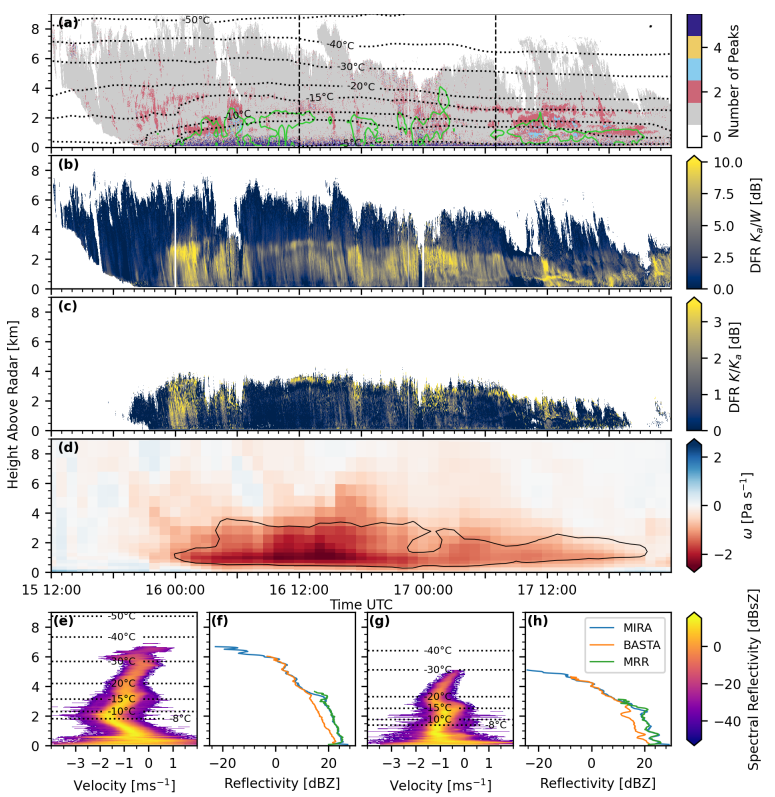
📄 [Preprint] Precipitation processes in an Antarctic moist air intrusion: insights from multi-frequency radar observations over a 1100-km transect (Corden et al., 2026)
In Antarctica, intrusions of warm, moist air from the coast to the high plateau are responsible for a significant proportion of the snow accumulating on the ice sheet each year. We present a case study of an intrusion in East Antarctica in February 2025. Meteorological radars along a 1100-km transect were used to investigate the processes leading to precipitation in the intrusion. The processes vary according to the changing temperature, humidity and wind dynamics between the coast and plateau.
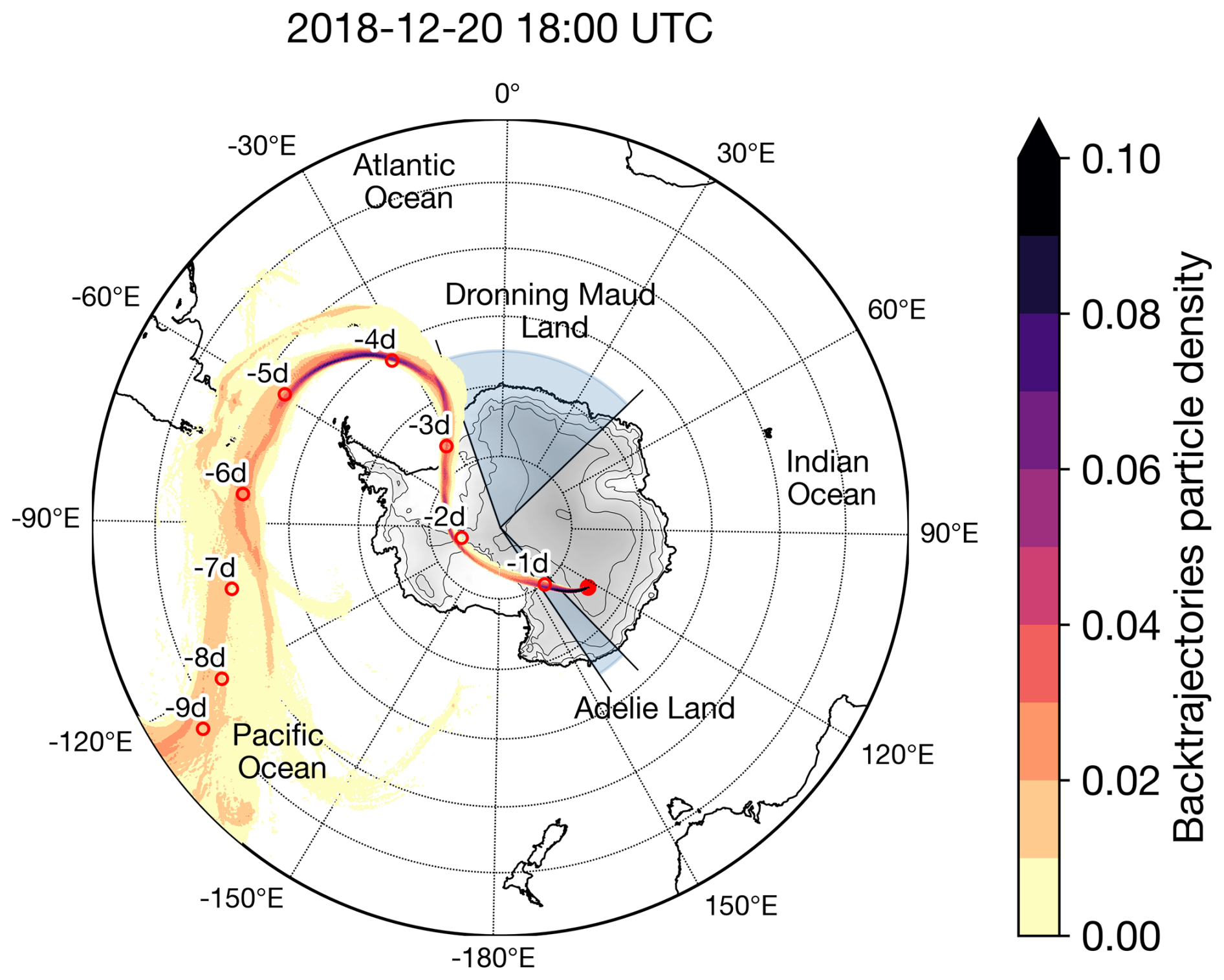
📄 [Article] Water vapour isotope anomalies during an atmospheric river event at Dome C, East Antarctica (Dutrievoz et al., 2025)
Ice cores comprise one of the most comprehensive records of Earth's past climate, extending back hundreds of thousands of years. However, disentangling the information contained in the ice cores's isotopic signal in order to retrieve information on specific atmospheric events remains challenging. In this study, the authors show how atmospheric rivers - an extreme event that changes temperatures and humidity - are imprinted in the water isotopes. The study represents a major step forward in closing the knowledge gap, by discerning the local versus large-scale drivers of the isotopic signal.
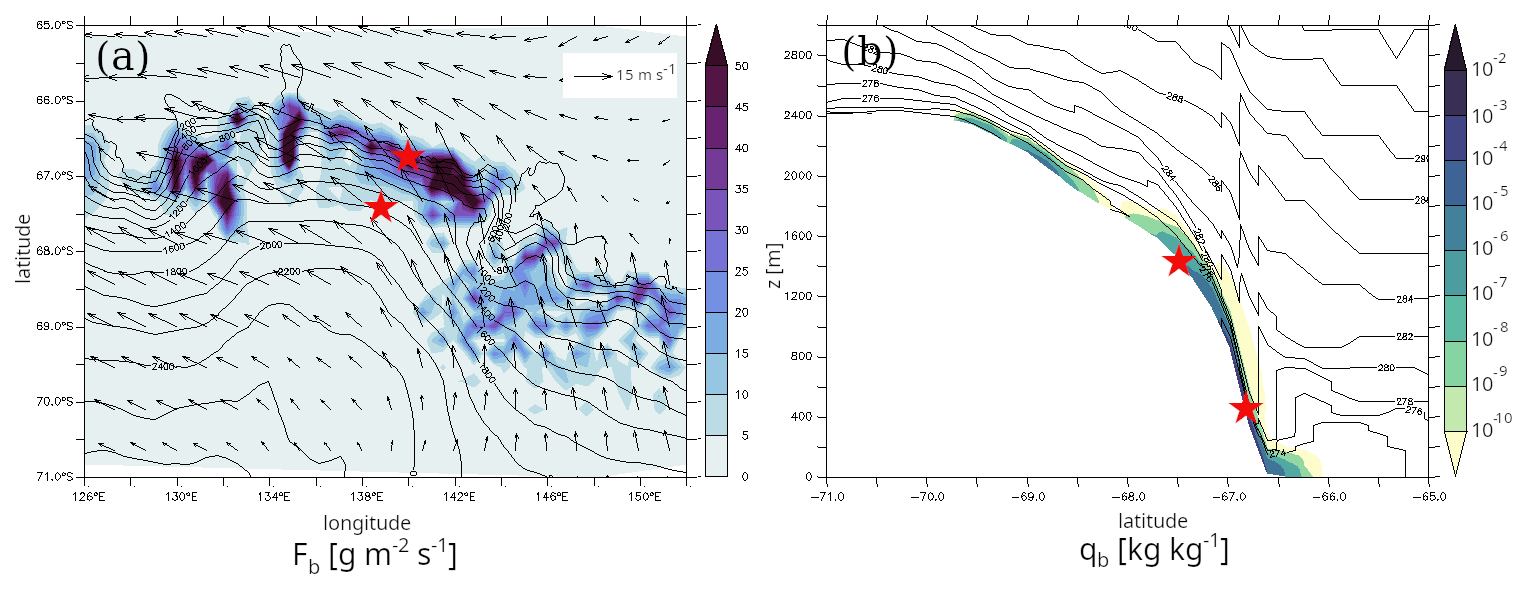
📄 [Article] Intermediate-complexity parameterisation of blowing snow in the ICOLMDZ AGCM: development and first applications in Antarctica (Vignon et al., 2026)
The erosion of surface snow by the wind is an important process for the Antarctic surface mass balance. This study presents the first development of a parameterisation of blowing snow for a global climate model. Simulations avec evaluated using measurements in Antarctica. Results show an overall decrease of the snow accumulation in the escarpment region of the ice sheet due to snow erosion and an increase at the coast due to blowing snow deposition and increase in precipitation.
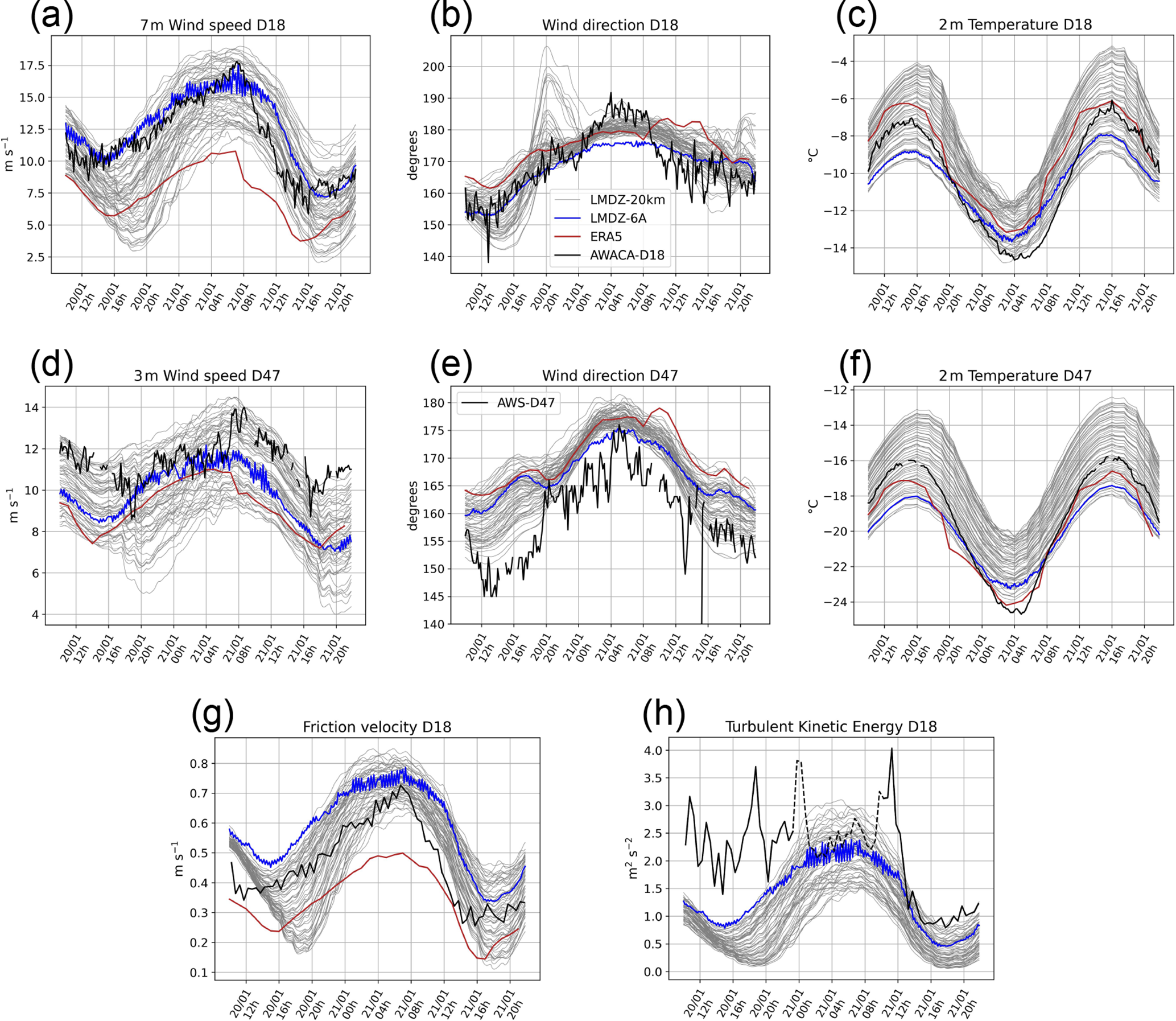
📄 [Article] An extensive investigation of the ability of the ICOLMDZ model to simulate a katabatic wind event in Antarctica (Wiener et al., 2025)
Katabatic winds are a key feature of the climate of Antarctica, but substantial biases remain in their representation in atmospheric models. This study investigates a katabatic wind event in an atmospheric circulation model using in-situ observations. The framework allows to disentangle which part of the bias is due to horizontal resolution, to parameter calibration and to structural deficiencies in the model. We underline in particular the need to refine the physics of the model snow cover.
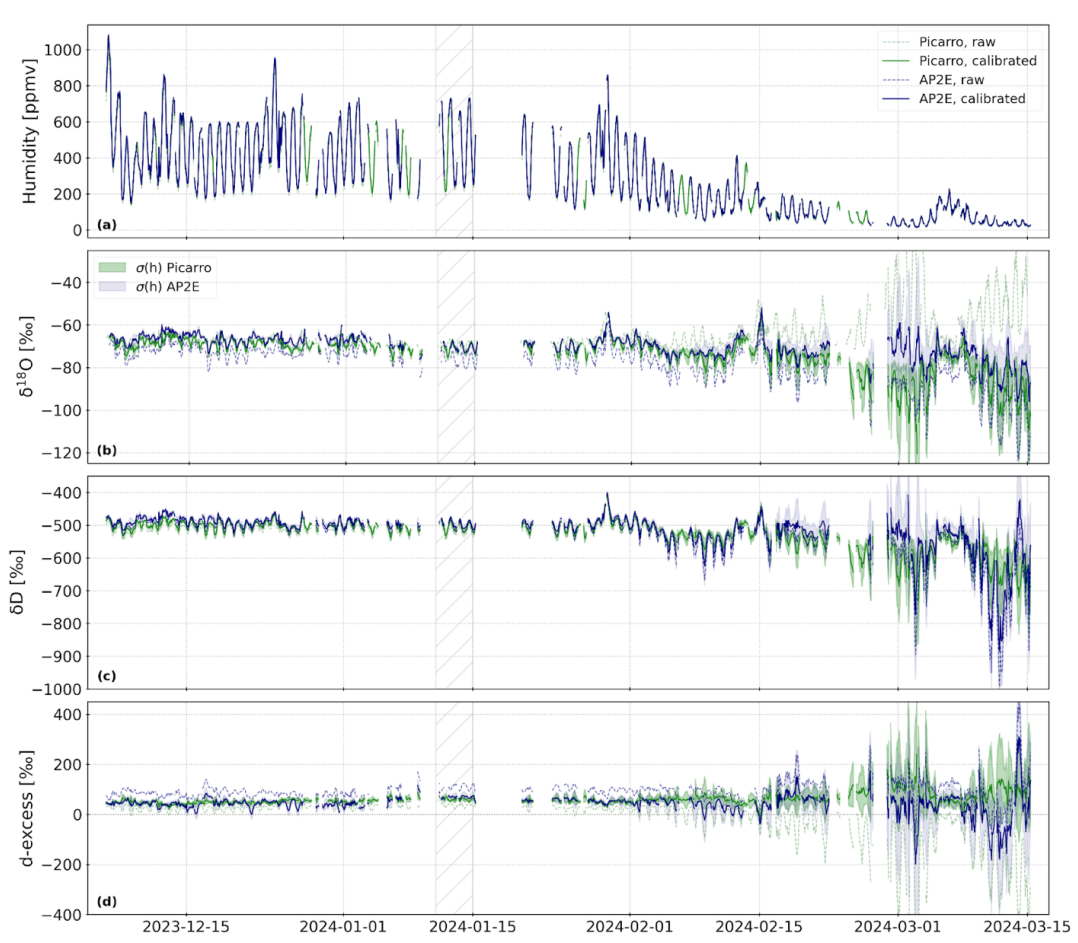
📄 [Article] Time series of the summertime atmospheric water vapour isotopic composition at Concordia station, East Antarctica (Ollivier et al., 2025)
We present a novel 2.5-month record of the atmospheric water vapour isotopic composition during the austral summer 2023–2024 at Concordia Station on the Antarctic Plateau. We show that two independent laser spectrometers accurately record the diurnal variability of the atmospheric water vapour 𝛿18O, 𝛿D, and d-excess. We compare the measurements against outputs of the isotope-enabled general circulation model LMDZ6-iso to show how the data can be used to evaluate such models.
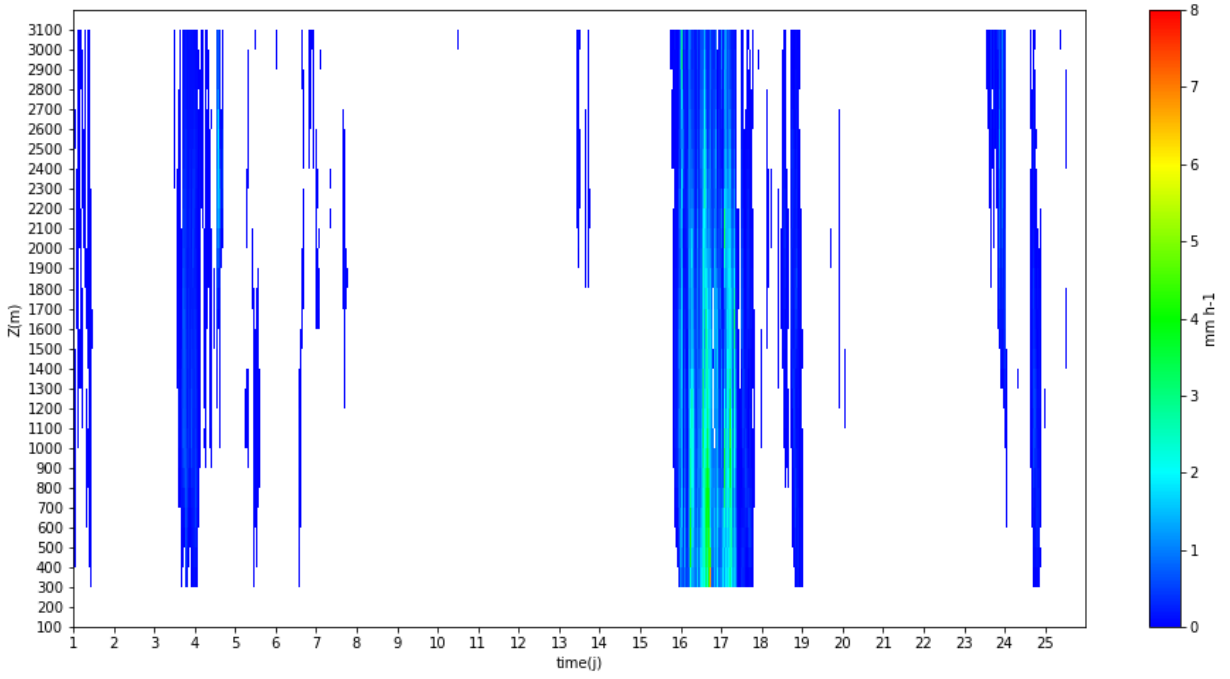
📄 [Internship Report] Characterisation of Antarctic Precipitation: case study, statistical methods for cross-comparing data from different surface-based remote sensing instruments
As part of his research project at ENSTA, Maxime Coste assessed the representativeness of an AWACA “golden event” selected in February 2025 using 15 years of MRR (Micro Rain Radar) data from Dumont d’Urville, and explored, using artificial intelligence methods applied to ceilometer measurements, how to fill the MRR surface blind zone.
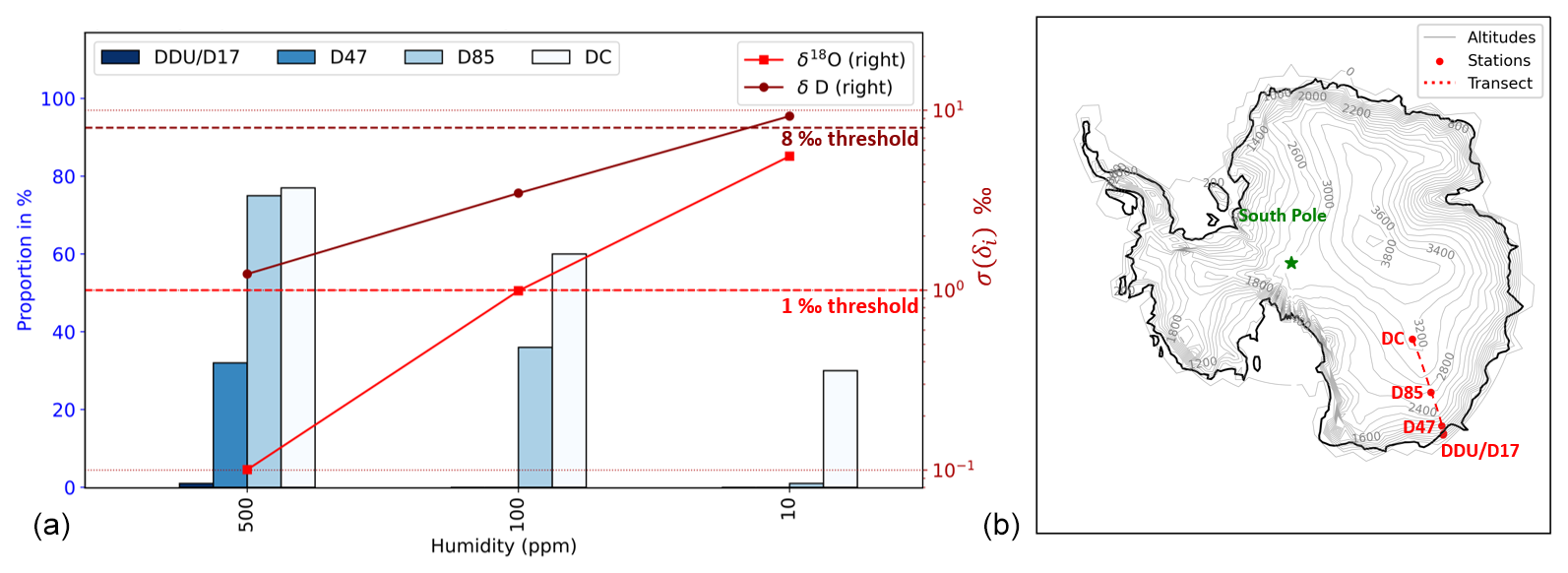
📄 [Article] OF–CEAS laser spectroscopy to measure water isotopes in dry environments: example of application in Antarctica (Lauwers et al., 2025)
Water vapour isotopes are important tools to better understand processes governing the atmospheric hydrological cycle. In polar regions, their measurement helps to improve the interpretation of water isotopic records in ice cores. However, in situ water vapour isotopic monitoring is an important challenge, especially in dry places of East Antarctica. We present here an alternative laser spectroscopy technique adapted for such measurements, with a limit of detection down to 10 ppm humidity.
📄 [Article] Antarctic Water Stable Isotopes in the Global Atmospheric Model LMDZ6: From Climatology to Boundary Layer Processes (Dutrievoz et al., 2025)
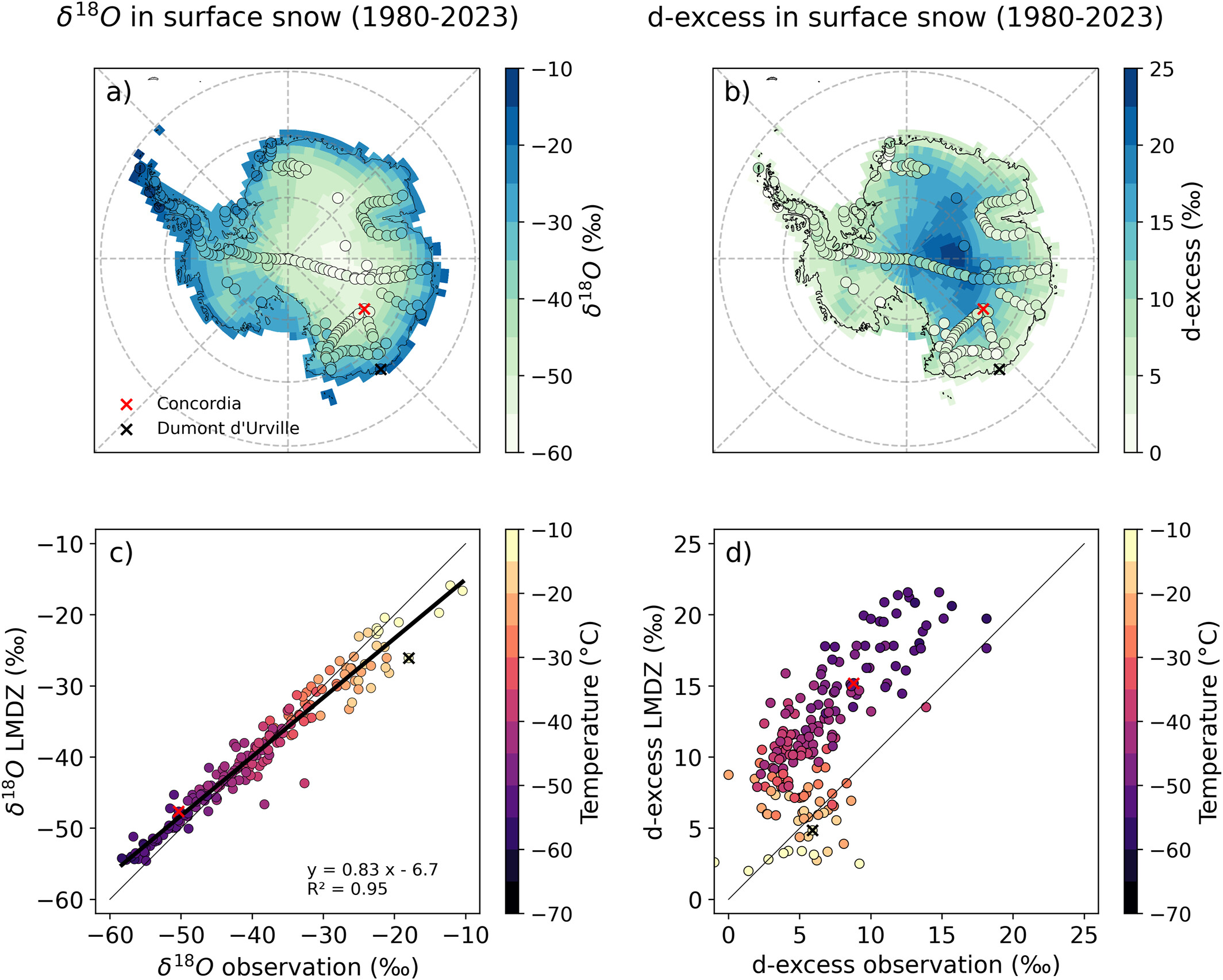
The transport of water isotopes by the atmosphere plays a key role in interpreting Antarctic climate archives. This study evaluates the LMDZ6iso atmospheric model using snow, precipitation and vapour isotope measurements from both coastal and inland East Antarctica. The model is assessed at spatial, seasonal and diurnal scales, and the contribution of individual processes to boundary layer vapour isotopes is analysed. Results highlight the importance of isotopic exchanges during sublimation and condensation at low temperature, and suggest that including these processes would improve the representation of water isotopes in climate models.
📄 [Article] Designing a Fully-Tunable and Versatile TKE-l Turbulence Parameterization for the Simulation of Stable Boundary Layers (Vignon et al., 2024)
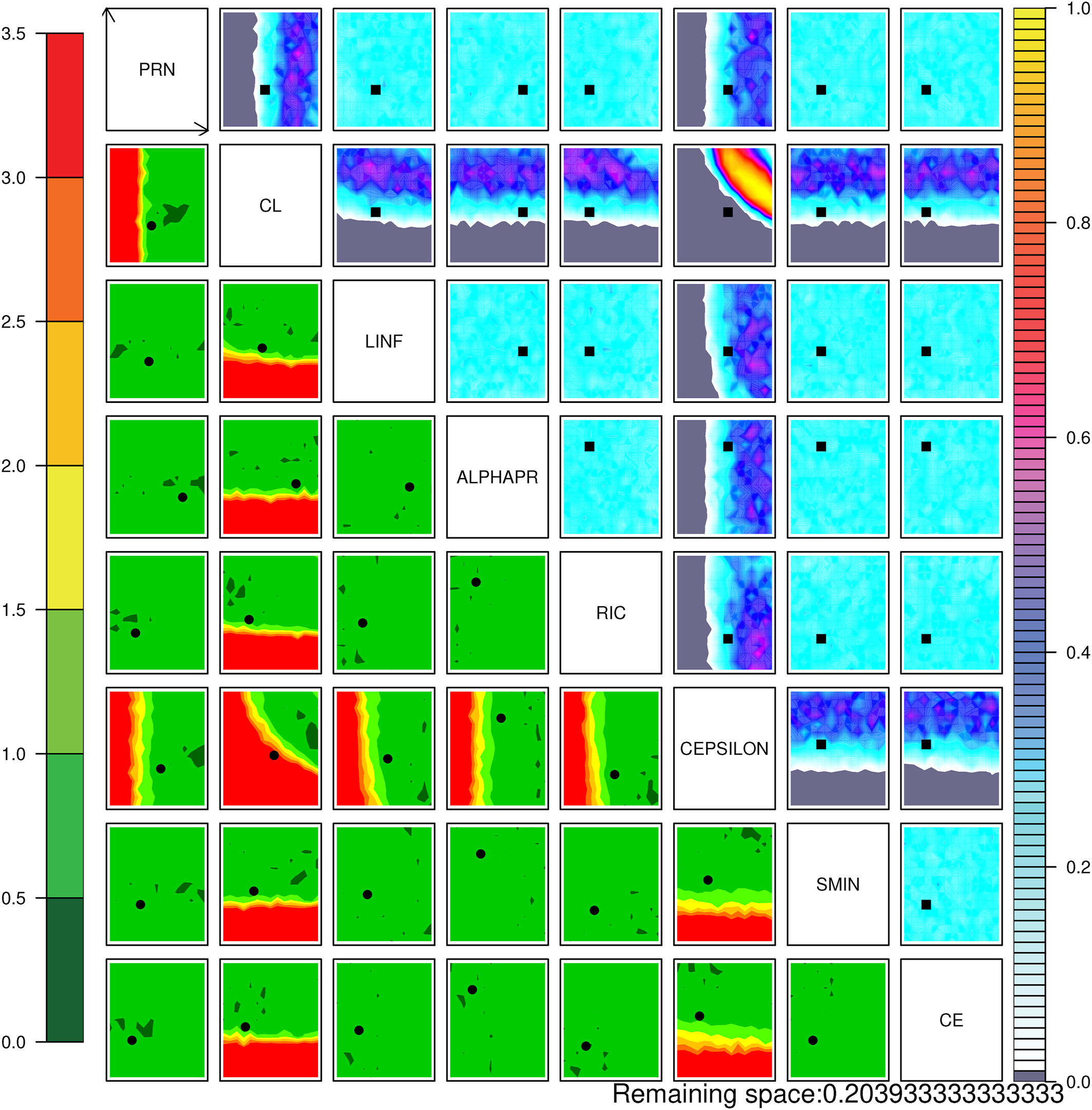
This study introduces a new fully tunable TKE-l parameterization for turbulent diffusion in planetary atmospheres. The scheme is designed with a minimal set of adjustable parameters and a mixing length formulation that accounts for both stability and wind shear, making it applicable to Earth and Mars. Emphasis is placed on ensuring numerical stability at large time steps, a key challenge in simulating stable boundary layers. After calibration on idealized 1D cases, the parameterization successfully reproduces Antarctic and Martian nocturnal boundary layers in 3D simulations, demonstrating its robustness and versatility.
📄 [Internship Report] Antarctic clouds: evaluation of the LMDZ model using satellite observations
As part of her Master’s internship (M2), Justine Charrel evaluated cloud cover over Antarctica in the latest version of the LMDZ6A climate model using observations from the CALIPSO satellite.
📄 [Article] Understanding the drivers of near-surface winds in Adélie Land, East Antarctica (Davrinche et al., 2024)
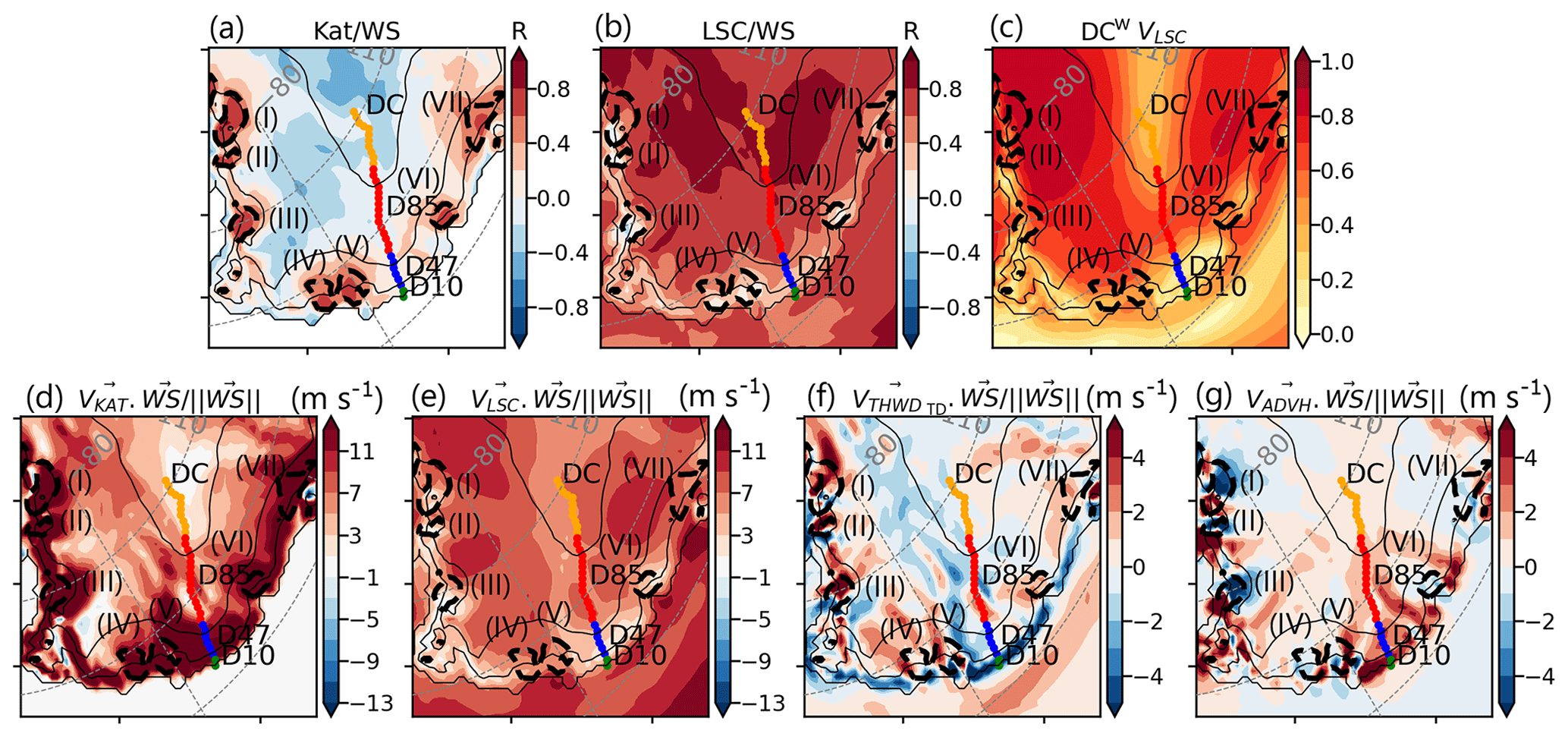
Coastal surface winds in Antarctica are amongst the strongest winds on Earth. They are either driven by the cooling of the surface air mass by the ice sheet (katabatic) or by large-scale pressure systems. Here we compute the relative contribution of these drivers. We find that seasonal variations in the wind speed come from the katabatic acceleration, but, at a 3-hourly timescale, none of the large-scale or katabatic accelerations can be considered as the main driver.